
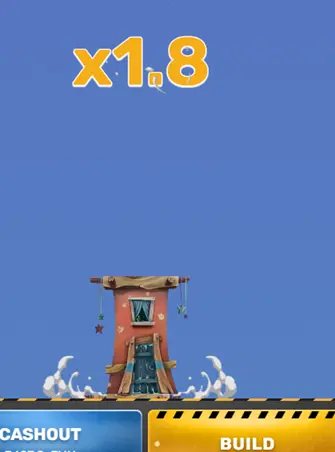

Build risks the current position for more value; cash out turns the current number into a completed result.
What Build really means
What Build really means is a practical part of the round, not decoration. Build risks the current position for more value; cash out turns the current number into a completed result. In Tower Rush the visible question is simple: is the current multiplier enough, or is one more floor still worth the risk?
In practical play, that means the current multiplier is only useful if you know what action will secure it. Build raises the possible result, while cash out turns the number into a completed round. A calm player reads both buttons as separate decisions instead of treating Build as the automatic way forward.
Not a long strategy game
There are no lanes, waves or upgrade trees; the tower is the visual form of a cash out round.
Fast decisions first
The best preparation is knowing the rules and your exit range before the action starts.
What Cash Out protects
What Cash Out protects keeps the page tied to verified game information. Build risks the current position for more value; cash out turns the current number into a completed result. In Tower Rush the visible question is simple: is the current multiplier enough, or is one more floor still worth the risk?
Facts matter because older descriptions of this title can drift into the wrong genre. The reliable frame is the provider page: Galaxsys, fast or turbo category, RTP range, release date and named bonus floors. The operator rule panel should still be checked before any stake is placed.
| Provider | Galaxsys |
|---|---|
| Category | Fast / Turbo Game |
| RTP | 96.17%-97% |
| Bonus floors | Frozen Floor, Temple Floor, Triple Build |
Setting an exit range
Setting an exit range is a practical part of the round, not decoration. Build risks the current position for more value; cash out turns the current number into a completed result. In Tower Rush the visible question is simple: is the current multiplier enough, or is one more floor still worth the risk?
In practical play, that means the current multiplier is only useful if you know what action will secure it. Build raises the possible result, while cash out turns the number into a completed round. A calm player reads both buttons as separate decisions instead of treating Build as the automatic way forward.
The pause after a successful floor
The pause after a successful floor matters because fast rounds punish vague plans. Build risks the current position for more value; cash out turns the current number into a completed result. In Tower Rush the visible question is simple: is the current multiplier enough, or is one more floor still worth the risk?
The risk is not complicated, but it is easy to underestimate because rounds are short. A budget, a stake size and a stop point should exist before the first build. Without that structure, the player reacts to the previous result instead of reading the current one.
Bonus floors and button discipline
Bonus floors and button discipline is about keeping decisions readable on a small screen. Build risks the current position for more value; cash out turns the current number into a completed result. In Tower Rush the visible question is simple: is the current multiplier enough, or is one more floor still worth the risk?
A good mobile experience keeps the multiplier, tower state and two main actions visible at the same time. If the interface is cramped, laggy or hides the rules, the round becomes harder to read. Screen comfort is part of risk control.

A clean round routine
A clean round routine gives the page a clear practical takeaway. Build risks the current position for more value; cash out turns the current number into a completed result. In Tower Rush the visible question is simple: is the current multiplier enough, or is one more floor still worth the risk?
The practical conclusion is deliberately modest: understand the game, set limits, and do not treat a good multiplier as a reason to ignore the plan. Tower Rush is most coherent when every round has a defined finish line.
Useful next pages
Reader questions
What is the main point of Build / Cash out?
Build risks the current position for more value; cash out turns the current number into a completed result. The page always brings that point back to the Tower Rush build and cash out loop.
Does this page create a separate practice section?
No. It stays editorial and uses the play buttons only as the game entry point.
Where should I read next?
Continue with How to play and RTP; together they add context without repeating the same angle.
Source: Galaxsys Tower Rush